
Exterior Styling & Louvers
Exterior styling on a GT86-style car is easy to overdo. The shape is already simple and compact, which is why heavy add-ons can make it look worse very quickly. My rule for visual changes is the same as the setup work: the car should still look like it is built to be driven.
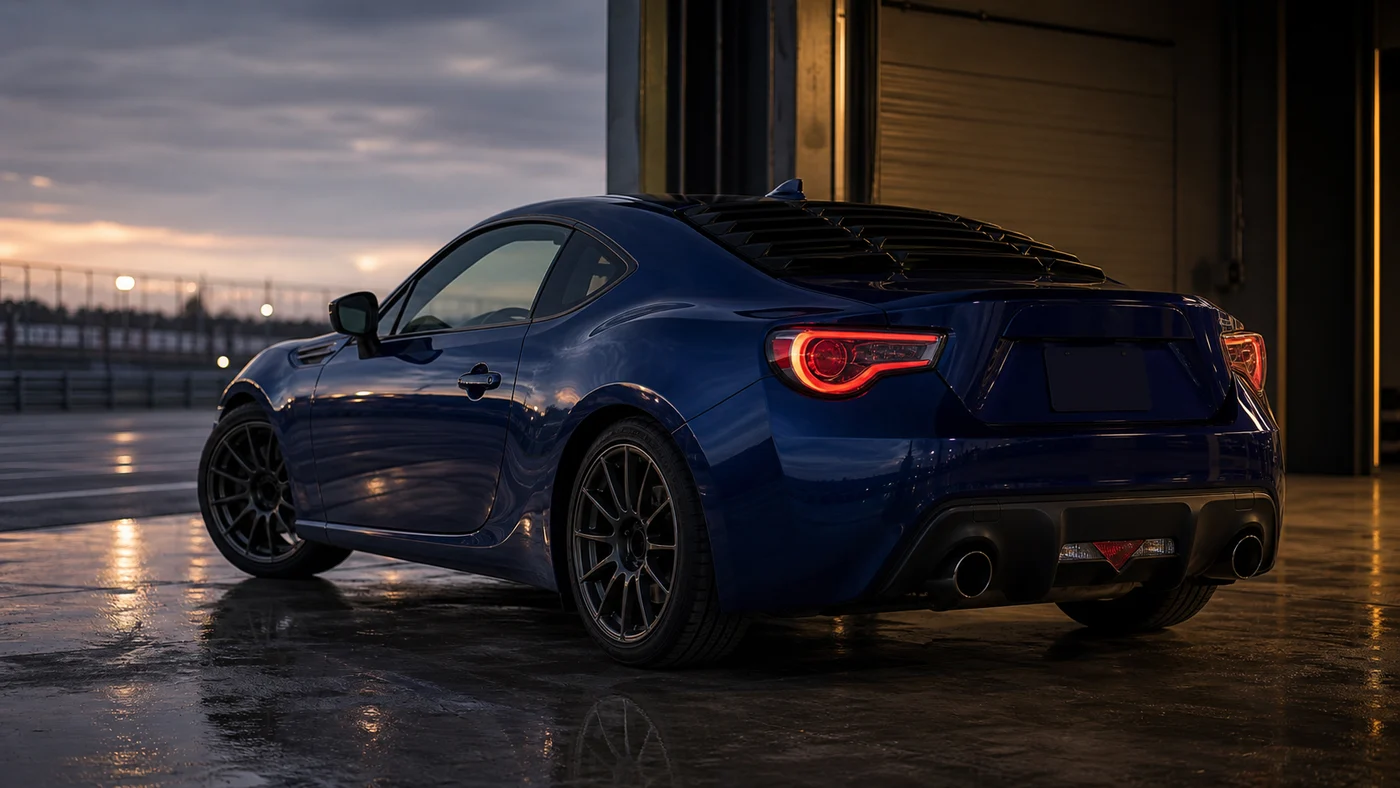
Rear window louvers sit right on that line. Done badly, they look like costume parts. Done carefully, they add depth to the rear quarter without shouting over the rest of the car.
Why louvers
The rear glass area on the coupe is visually large. Louvers break up that surface and make the side profile look lower without changing the bodywork.
That matters because I am not trying to make the car look like a time attack build. No oversized aero for road use, no bolt-on pieces that fight the factory lines, and no styling parts that make maintenance annoying.
The goal is a cleaner silhouette: a little more purposeful from the rear three-quarter angle, but still subtle enough that the car does not look parked outside an accessory catalogue.
Fitment before opinion
Most styling parts fail on fitment before they fail on taste. If the edges lift, the mounting tape shows, or the piece does not follow the glass properly, it immediately looks cheap.
Before committing to any adhesive part, I like doing a dry fit in daylight and again under garage lighting. Harsh light shows edge gaps. Low light shows whether the shape works with the rest of the car.
For louvers, the checks are straightforward:
- even edge spacing around the glass
- no interference with hatch movement
- no contact with seals
- secure mounting points that can survive washing and road vibration
- rear visibility that remains acceptable
If any of those are wrong, the part is not ready, even if it photographs well.
Keeping the car usable
Styling parts should not make normal ownership worse. The car still needs to be washed, inspected, parked outside, and driven in bad weather.
That means avoiding fragile hardware and making sure the louvers can be removed without damaging the glass or trim. I also care about noise. If a part whistles or rattles at speed, it is not a styling upgrade. It is a problem with a nicer name.
The same thinking applies to other exterior pieces. Small side details, wheel choice, and ride height all need to work together. One aggressive part can make every other modest choice look confused.
Colour and contrast
The deep blue paint does a lot of the work already. Black exterior pieces can either sharpen the shape or flatten it, depending on how much contrast they create.
For louvers I prefer satin or low-gloss black. Gloss black can look good when clean, but it also highlights dust, scratches, and uneven surfaces. Satin black feels more mechanical and less decorative.
The rest of the car should stay visually quiet. Clean wheels, sensible tyre fitment, and restrained trim changes are enough. If every part tries to be the focal point, the build stops having a point of view.
What I would not add
I am not interested in fake vents, fake carbon, or parts that suggest a function they do not have. Cosmetic parts are fine, but they should be honest about being cosmetic.
The GT86 works because it is light, direct, and simple. The exterior should reflect that. A good visual change should make the car look more like itself, not like it is borrowing an identity from something else.
Next steps
The next exterior pass is about small details: checking the louver fit after heat cycles, looking at side-profile balance with the current wheel setup, and deciding whether any other black accents are needed at all.
The best outcome is boring in the right way. Nothing loose, nothing awkward, nothing that makes the car harder to live with. Just a cleaner rear profile and a build that still feels mechanically honest.